Problems with the feet and ankles can affect how the rest of the body moves. Care may include chiropractic adjustments, muscle work, exercises, and shockwave therapy when appropriate.
For patients with arthritis, care focuses on joint mobility, surrounding muscle function, and maintaining comfortable movement. Your approach will depend on the joints involved and your individual needs.
Back discomfort may involve the joints, muscles, posture, or movement patterns. We may combine adjustments, muscle work, stretching, and strengthening to address what we find.
Disc problems can cause symptoms in the back or neck and sometimes into the arms or legs. Depending on your evaluation, care may include gentle adjustments and spinal decompression.
Numbness, tingling, and discomfort in the hand or wrist can have several possible causes. We evaluate the wrist, hand, forearm, and surrounding areas before recommending appropriate care.
Long-standing discomfort can involve tight or overworked muscles, weakness, joint restrictions, and compensation patterns. Care is personalized around your examination findings and may combine adjustments with muscle work and strengthening.
Infant chiropractic care uses very gentle techniques appropriate for a baby’s developing body. Chiropractic isn’t a treatment for colic or reflux themselves, but parents may seek care when they have concerns about their baby’s musculoskeletal comfort or movement following birth.
Age-related changes in the discs and joints may be accompanied by stiffness or discomfort. Chiropractic care and, when appropriate, decompression may be used to address mobility and musculoskeletal symptoms.
Chiropractic care doesn’t treat ear infections. When parents bring children to us with ear-related concerns, our role is limited to evaluating and addressing relevant musculoskeletal findings, including the neck and surrounding areas.
Whether symptoms developed gradually or followed repetitive activity, we’ll assess the elbow and surrounding muscles. Care may include adjustments, muscle work, strengthening, or shockwave therapy when appropriate.
For patients living with fibromyalgia, gentle chiropractic care may be considered as part of a broader approach to managing musculoskeletal stiffness and discomfort. Techniques are adapted to the individual’s sensitivity and tolerance.
Foot discomfort can affect everyday movement from the ground up. Depending on what’s causing your symptoms, care may include foot adjustments, calf stretching, muscle work, exercises, and shockwave therapy.
Some headaches are associated with neck tension, joint restriction, or posture. When musculoskeletal factors are present, chiropractic care may address the neck and upper back as part of an individualized plan.
Hip discomfort may involve the hip itself, the low back, or surrounding muscles. We evaluate how these areas are working together before determining the right approach.
Because the knee works closely with the feet, ankles, hips, and pelvis, we’ll look beyond the painful area. Care may involve adjustments, muscle work, strengthening, or shockwave therapy.
Posture, ergonomics, joint mobility, and muscle tension can all play a role in neck discomfort. Care may combine chiropractic adjustments with practical changes to how you sit, work, and move.
Nerve-related symptoms can have different causes, including disc problems or surrounding musculoskeletal structures. We first determine what may be involved, then recommend care or referral when appropriate.
Changes in pelvic mechanics can influence the low back, hips, knees, and ankles. Chiropractic adjustments, exercises, and postural recommendations may be used to address relevant musculoskeletal findings.
As the body changes throughout pregnancy, discomfort may develop in the back, hips, pelvis, or other areas. We use pregnancy-appropriate techniques and have a specialized pillow that allows expectant moms to lie face-down during care when comfortable.
Sciatic symptoms may have several possible causes. We assess the spine and surrounding muscles to determine what may be involved, with care potentially including adjustments, muscle work, stretching, and strengthening.
For patients with scoliosis, chiropractic care doesn’t straighten or cure the spinal curve. Instead, care may focus on associated joint restriction, muscle tension, mobility, and musculoskeletal discomfort.
Because the neck, mid-back, and shoulder work together, we assess all three areas when appropriate. Care may include adjustments, rotator cuff muscle work, exercises, or shockwave therapy.
Sports injuries can look very different depending on whether they’re new, recurring, or related to overuse. We tailor care to the injury and may incorporate adjustments, muscle work, mobility exercises, and strengthening.
Hours spent looking down at phones, laptops, and other devices can place added strain on the neck and upper back. Care may combine adjustments with postural and ergonomic recommendations.
Tinnitus has many potential causes and should be medically evaluated when appropriate. Chiropractic care doesn’t treat tinnitus itself, but we can assess whether neck or jaw-related musculoskeletal issues are also present.
Jaw discomfort may occur alongside tension or mobility problems involving the TMJ, neck, and surrounding muscles. Care may include gentle manual techniques, muscle work, and other appropriate therapies.
Because vertigo can have several causes, determining the source is important. Chiropractic care isn’t appropriate for every type of vertigo, but we can evaluate for relevant neck or musculoskeletal factors and refer when necessary.
After a car accident, we’ll evaluate the neck and surrounding tissues to understand the nature of the injury. Depending on the findings and stage of recovery, care may include adjustments, muscle work, TENS therapy, and progressive strengthening.
The wrist contains several small joints along with numerous muscles and ligaments. We assess both joint and soft-tissue function to determine what may be behind pain with movement.

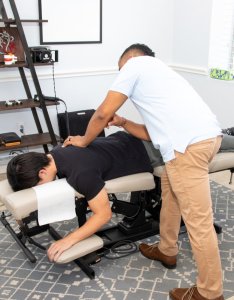 At Resolve Chiropractic and Wellness our mission is simple: help you move, feel, and function better, naturally. For more than two decades, our Celina chiropractic team has provided gentle, personalized care for individuals and families.